
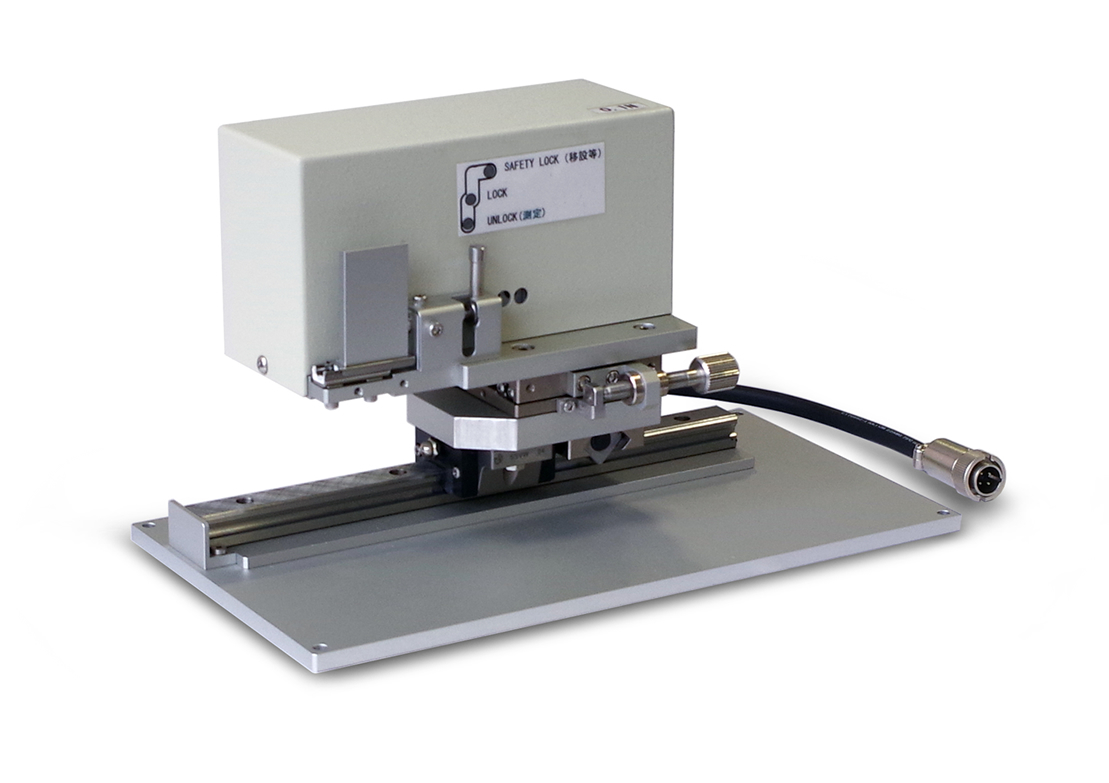


With the development of our Versatile Peel Analyzer VPA series, measurements, once impossible or hardly achievable with conventional tensile strength testers, have finally become possible. When equipped with our low-force load cell with a full-scale rated capacity of only 0.1 N, even minuscule peel strengths as low as 0.001 N can be measured and easily compared.
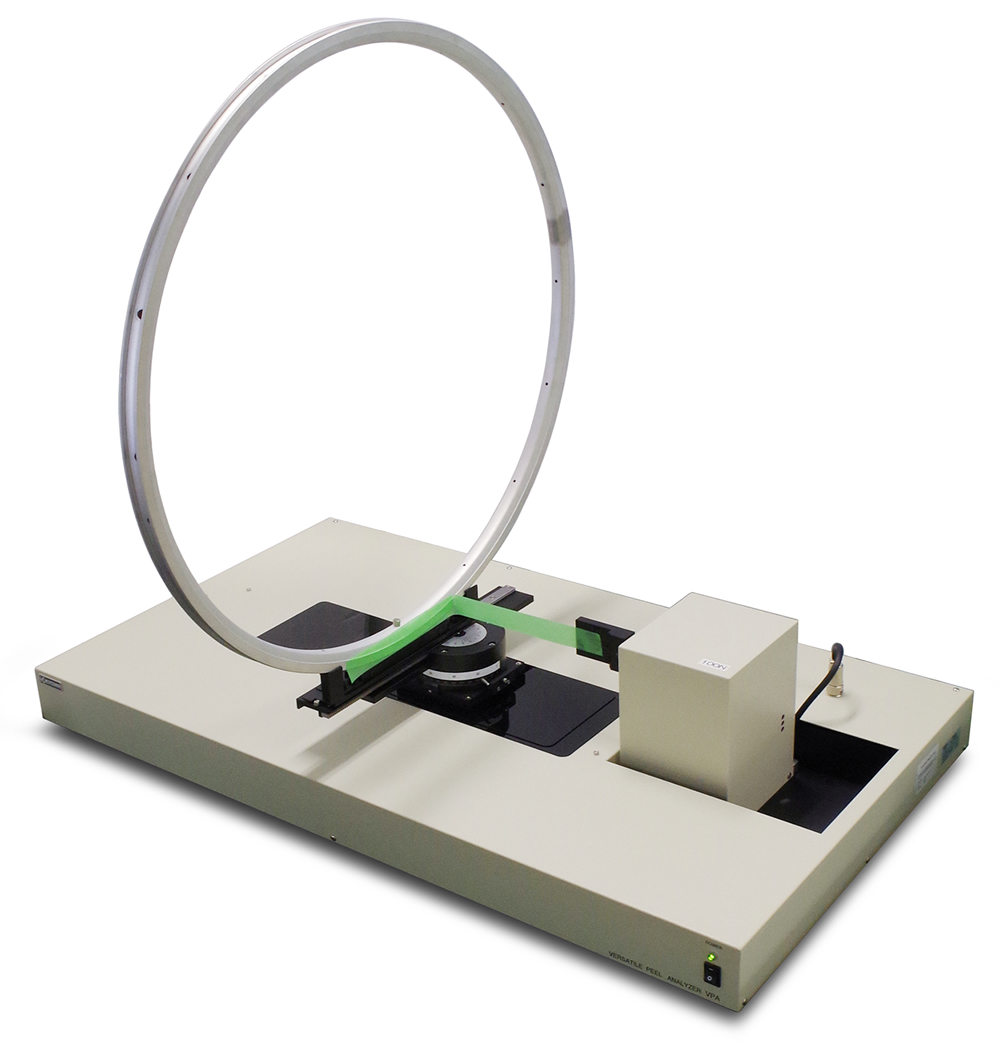
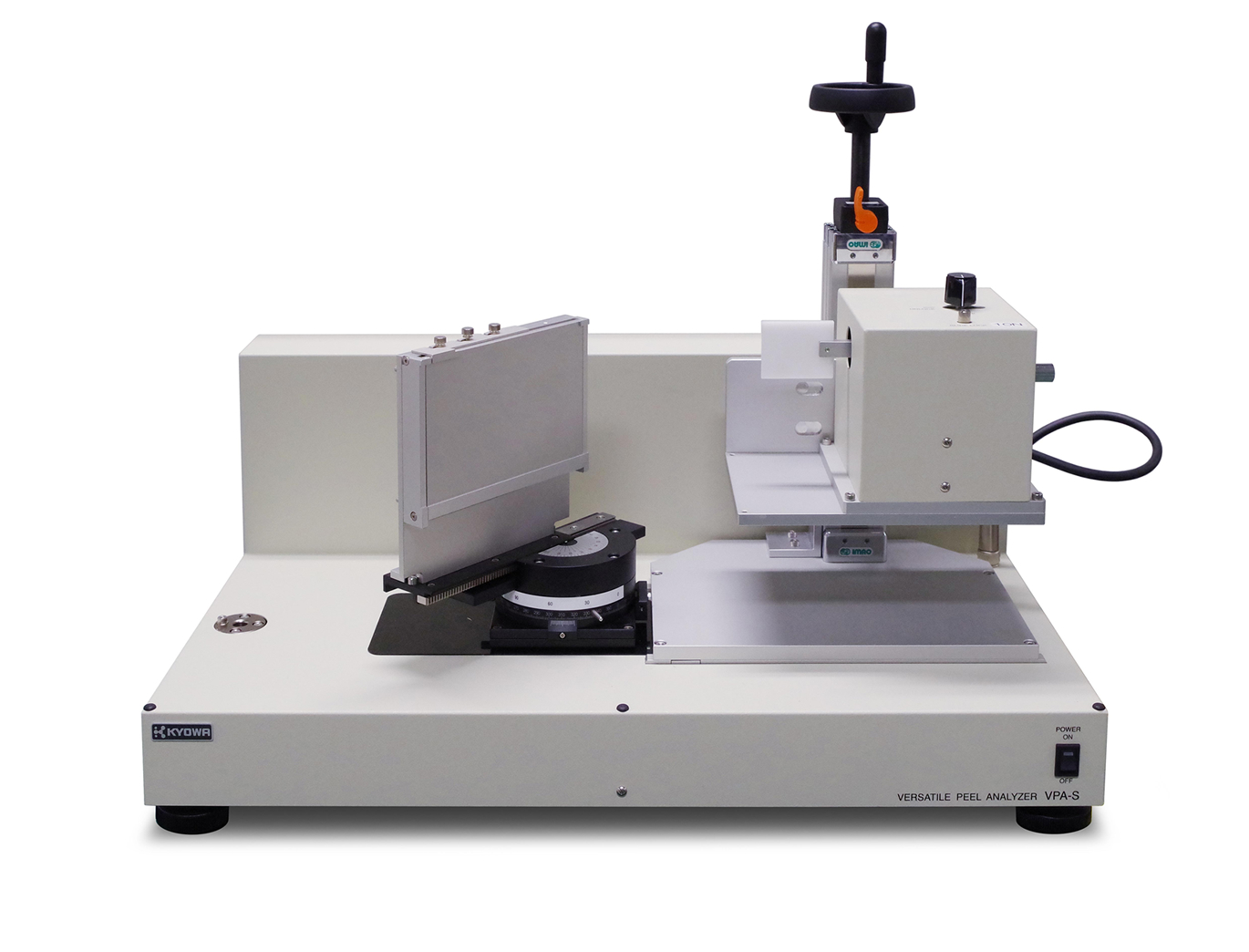
The most remarkable feature of our Versatile Peel Analyzer VPA series is that the peel behavior of composite materials, such as packaging materials, laminated materials, laminated films, coating films, ceramic green sheets, etc., can be evaluated under freely adjustable peel angles from 0 to 180º using Kyowa’s unique proprietary 'Flat Plate Cross Stage Method' and self-developed analysis software.
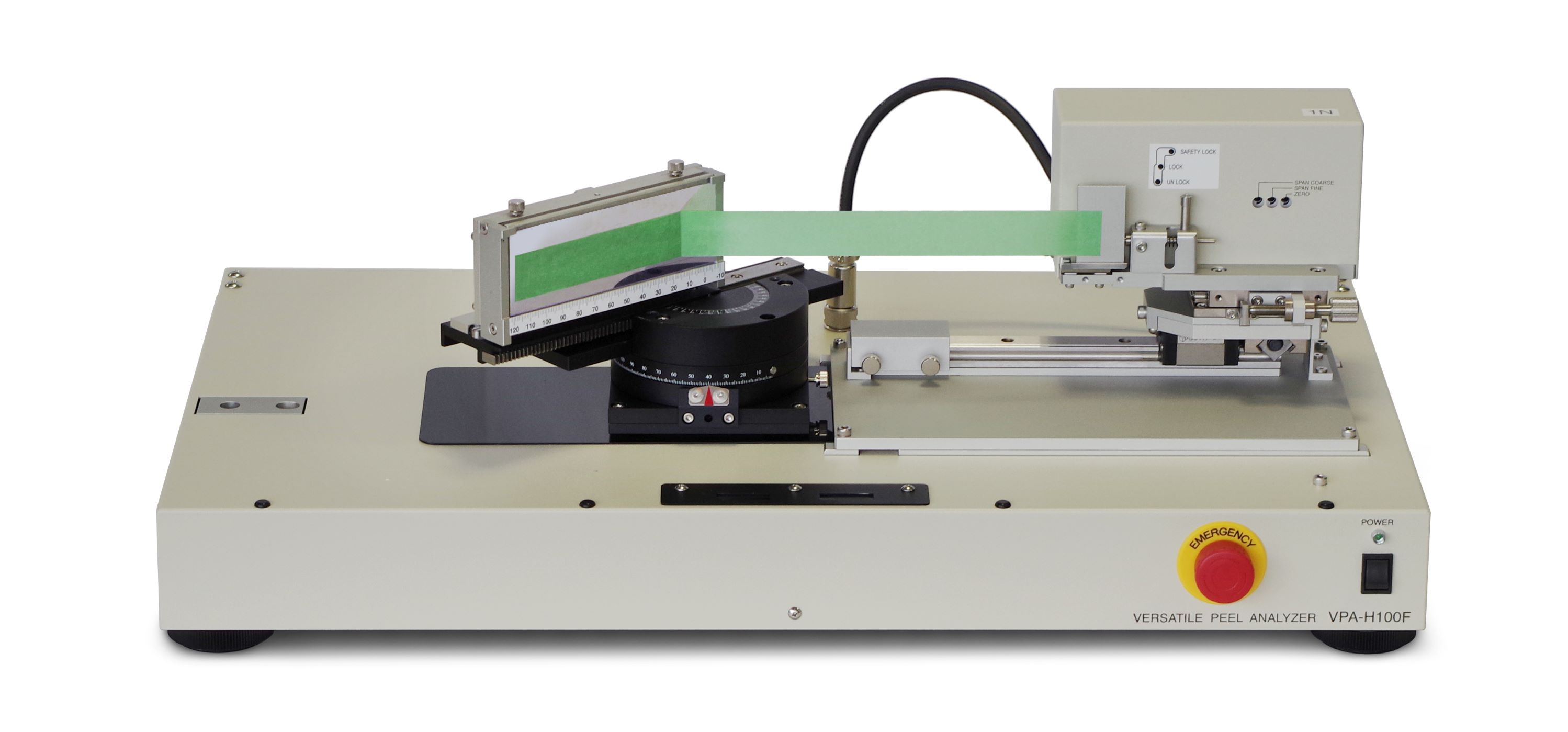
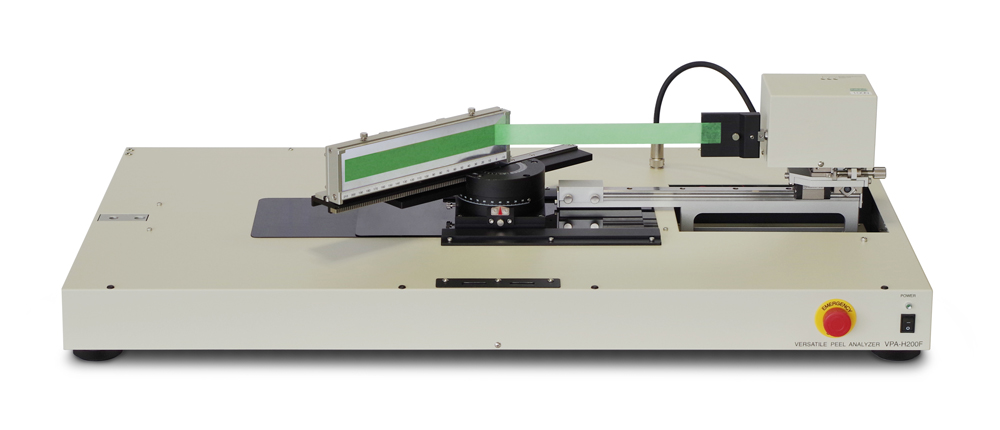
While the standard VPA-H200 and compact VPA-H100 models share the same functions and features, the VPA-H200's 200 mm sample stage provides an effective peel distance twice that of the VPA-H100. The sample stage's maximum speed of 30.000 mm/min allows for a peel rate 2.5 times higher than that of the VPA-H100.Measurement of Peel Strength
Pressure-sensitive adhesive tapes, or PSA tapes, play significant roles as constitutive and integral parts of production processes across various forefront industries, including flat panel displays, semiconductors, optical instruments, solar batteries, automobiles, architecture, and medical treatments.
The peel adhesion, shear resistance, and tack tests characterize the performance of PSA tapes. The widespread peel adhesion test provides an objective, quantitative appraisal in accordance with international standards ISO 8510-1 and 2, as well as the 90º and 180º peel tests. The 180º peel test is slightly affected by the thickness and elasticity of PSA tape, and the 90º peel test may experience elongation and sagging of PSA tape due to the somewhat complex structure of the jigs.
Demands on peel adhesion, peel angle, and peel rate for optimizing adhesive tapes used in production processes vary widely by applications.
Kyowa's Patented Stage Design
Evaluating adhesive performance at a single random angle often doesn't reflect real-world conditions. In practice — such as removing a screen protector, opening food packaging, or measuring the adhesive force between ceramic green sheets and carrier films for laminated ceramic capacitors — those forces vary depending on the angle.
To eliminate guesswork and enable precise analysis of angle-dependent characteristics across a continuous spectrum, Kyowa has engineered a proprietary, patented stage mechanism, the Flat Plate Cross Stage Method. By combining specialized hardware architecture with variable-angle flexibility, this design ensures highly reproducible interfacial adhesion analysis under real-world conditions.
Innovative Mechanical Features
The Flat Plate Cross Stage:
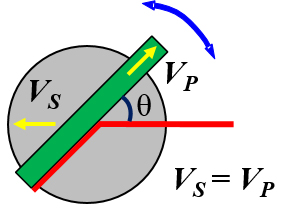
KYOWA's proprietary sample stage sits on a rotary table, allowing the peel angle to be swiftly adjusted from 0 to 180º without the need for jigs or tools.
The system's synchronized actuator mechanism maintains a constant peel rate and angle throughout stage travel, enabling precise execution with zero tape sag.
This constant peel rate allows direct mapping of changing forces to the peel angle without mathematical compensation for speed variations.
Simple Peel Angle Setup:
Changing test angles shouldn't mean wasting hours resetting your laboratory hardware. Traditional tensile testers require tedious, specialized jigs and mathematical recalculations for every single modification.
With our VPA models, adjusting the peel angle from 0º to 180º takes just a few seconds. Simply loosen the locking screw, match your desired angle on the integrated scale, and tighten it back up. The system automatically handles the rest, ensuring your peel tests are perfectly repeatable and entirely hassle-free at any angle.
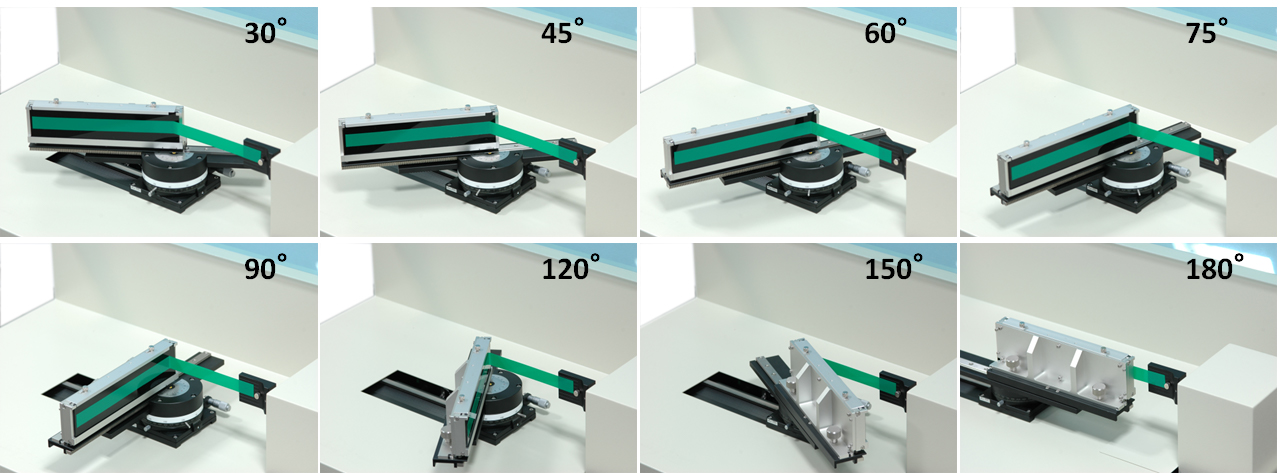
Simulating Real-World Behavior with Variable Angle Testing
Standardized 90º or 180º tests are vital for quality control, but real-world peeling happens at every angle in between. By viewing our video demonstrations at 60º, 90º, and 120º, you can see how our analyzer captures subtle shifts in peel behavior. For example, many adhesive tapes hit peak peel strength at 30º and reach a critical turning point at 120º. Understanding these exact transition points is the key to mastering adhesive performance.
Watch how smoothly our analyzer adapts to different testing scenarios, maintaining a perfectly synchronized peel rate and angle throughout the entire stage travel — all without the hassle of complex jigs or manual recalculations.
60º Peel Test
Ideal for evaluating low-angle peeling and early-stage release behavior.
90º Peel Test
Standard test setup at a peel rate of 600mm/min.
120º Peel Test
Observation of critical turning points at an obtuse angle.
High-Precision Peel Strength Data Analysis
How does your adhesive react when the peel angle transitions from acute to obtuse?
Rather than guessing the performance gap between a 30º and a 180º pull, our advanced software tracks the exact curves and turning points, ensuring your composite materials, laminated films, or electronics components perform exactly as engineered.
The graph shows the typical peel strength curve of adhesive tape as a function of peel angle. At a peel angle of 30º, the peel strength is at its maximum, decreasing gradually with increasing peel angle up to about 120º. A turning point is evident here, after which the peel strength gradually increases with increasing angle.
To design truly reliable products, R&D engineers must see exactly how a material behaves across this entire range.
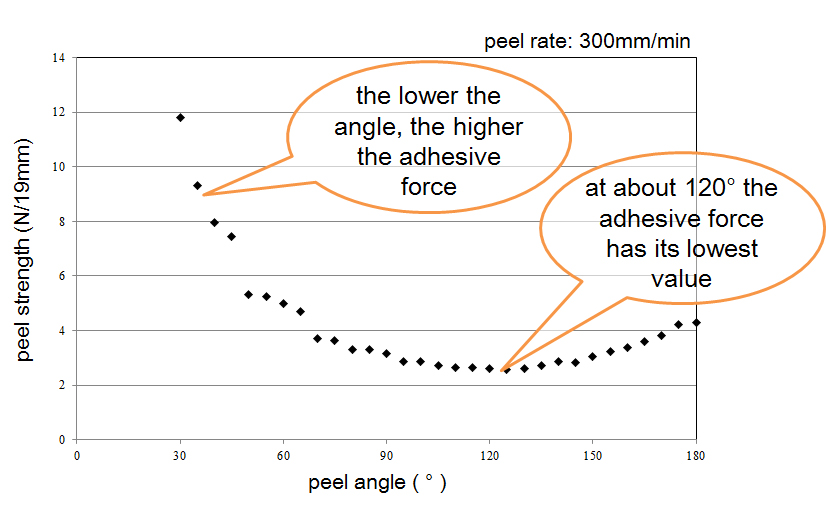
Figure: Representative load-displacement curve generated across variable angles.
■ Main Features
- Peel angles between 0 and 180º
- Peel rates from 3 up to 30.000 mm/min
- Effective peel area of up to 40 x 200 mm
- Quick and easily exchangeable load cell units (0.1 N, 1 N, 5 N, 10 N, 50 N, and 100 N full scale rated capacity) incl. calibration kit
- Overload protection (at 90 % of the full-scale rated capacity of the load cell)
- Emergency stop button
■ Optional Hardware Accessories
- Heater-type temperature-controlled sample stage for measurements from ambient to +180 ℃
- Jacket-type temperature-controlled sample stage for measurements from +10 to 70 ℃
- Protective cover with an optional interlock safety switch
- 2 kg manual hand roller for preparing tapes
- Peel behavior observation by a special camera system
- Equipment for tensile strength testing (applicable only with 50 N or 100 N load cell units)
- A wide variety of different kinds of grips, such as pneumatic grips
- Special sample stage for 180 º peel tests
■ Key Application Areas
- Effects of peel angles and peel rates on peel behavior of PSA tapes, packaging films, labels, release papers/films
- Peeling properties between carbon fiber prepregs and release papers
- Releasing strength between protective films and critical surfaces such as phone displays, glasses, metals, carpets
- Peel/bond strength between laminated film layers, holograms on plastic cards, coating films on glass or metal, adhesive tapes on silicon wafer, and frames
- Adhesive strength between thin-film electrodes and current collectors in lithium-ion batteries
- Adhesive strength between ceramic green sheets and carrier films for laminated ceramic capacitors
- Visualization/observation of the peeling process from above and behind the adherend
- Low force tensile strength tests of various films
| VPA-H100F | VPA-H200F | |
| Measuring method | Flat Plate Cross Stage Method | |
| Rated capacity (full scale) load cell units |
0.1 N, 1 N, 5 N, 10 N, 50 N, 100 N |
|
| Maximum measuring load | 90 % of the load cell’s rated capacity | |
| Display resolution of load cell units |
0.1 N, 1 N, 5 N, 10 N: 0.001 N 50 N, 100 N: 0.01 N |
|
| Adherend sample shape: Dimensions (WxL) Maximum thickness |
flat sheet, plate, or strip 50 x 130 mm 3 mm |
flat sheet, plate, or strip 50 x 230 mm 3 mm |
| Max. peel area (WxL) | 40 x 100 mm | 40 x 200 mm |
| Stage travel speed range (Vs) | 3 to 12.000 mm/min | 3 to 30.000 mm/min |
| Max. stage travel distance (Ds) | 100 mm | 200 mm |
| Default sampling rate 1) | every 0.20 mm | every 0.25 mm |
| Peel rate (Vp) |
Vp=Vs (Peel rate=Stage travel speed) the peel rate is independent of the peel angle |
|
| Peel rate dependency |
measurement of one peel rate or gradually changed peel rates within one measurement cycle |
|
| Peel angle dependency | measurement of any peel angle between 0 and 180° | |
| Analysis contents |
- peel force versus peel distance - peel force versus peel rate - peel force versus peel angle |
|
| Dimensions (WxDxH) | 620 x 400 x 270 mm | 910 x 550 x 270 mm |
| Approximately weight | 25 kg | 41 kg |
| Electric power: Voltage Frequency Power consumption |
AC 100 to 240 V 50/60 Hz 25 W 65 VA |
|
| Operating environment |
temperature: +10 to +35 ℃, humidity: 30 to 80 %RH (non-condensing) positioned away from sources of electrical noise and vibration |
|
1) For both models, the sampling rate can be set to 0.10 mm for peel rates up to 6.000 mm/min and 0.05 mm for up to 3.000 mm/min.