

A Conversation with Dr. Chiaki Mukai
— Interface Science, Space, and Modern Approaches to Work
| 2021/07/15 | Dr. Chiaki Mukai (Astronaut, Special Vice President, Tokyo University of Science) |
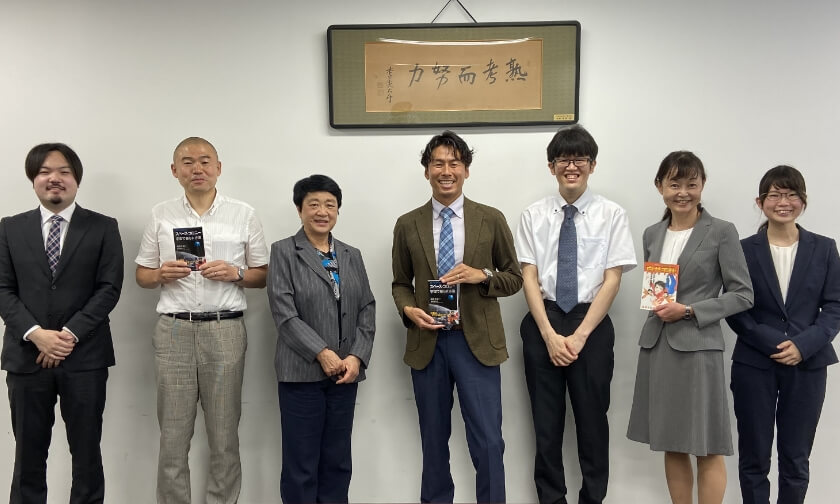
Despite her extremely busy schedule, Dr. Mukai kindly took the time to share her valuable insights with us on topics ranging from interface science and space to modern approaches to work and productivity.
On Interface Science and Space
——— Dr. Mukai, could you share your perspective on space and interface science?
Dr. Mukai: Many space experiments focus on fluid dynamics. Under microgravity, fluids like colloidal solutions are influenced by many different factors, so being able to measure interfacial phenomena—things like surface tension and contact angle—is really valuable.
For example, in one space experiment, we created a three-layer system of water–oil–water under microgravity and observed how the interfaces moved when we applied a temperature gradient. On Earth, we prepared three liquids separated by thin films, and then in space, we carefully removed the films to form the three-layer system. Interestingly, when the films were removed, the water and oil ended up forming two layers along the inner and outer walls of the container. The liquid that had a stronger affinity for the walls moved toward them. On Earth, gravity would cause the liquids to separate vertically, but under microgravity, the separation happens differently. Being able to quantify and study this kind of behavior is extremely useful.
——— We would be delighted if our company could also contribute to advancing research in space and interface science.
Work–Life Balance and Approaches to Work
——— Our company has been recognized through government-certified programs that promote a supportive and family-friendly work environment. Dr. Mukai, despite your very demanding schedule, you have always seemed to maintain a fulfilling professional and personal life. How have you managed your work–life balance?
Dr. Mukai: I’ve always valued my work and the people I enjoy working with. I chose to get married, but I chose not to have children. We all have only 24 hours in a day, and we can’t choose everything. In the end, it comes down to making choices that you can truly accept for yourself. Once you make a choice, it’s important to think positively—“I chose this, and I chose not to pursue that”—rather than regretting what you didn’t choose. Today, with IoT and AI, there are more ways to delegate tasks to technology, allowing us to free up more of our own time. I believe this will broaden the range of choices people can make in their lives.
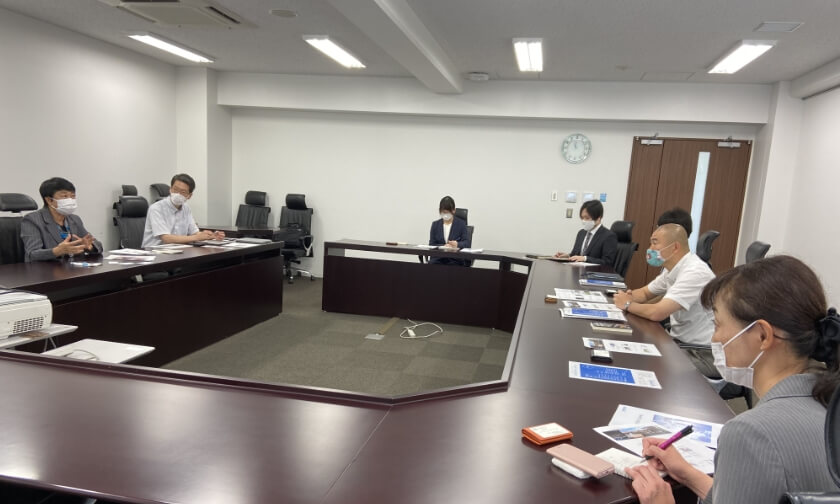
——— Dr. Mukai, you had an impressive career as a cardiovascular surgeon before deciding to make a major career change and become an astronaut. It seems to us that you have always been able to objectively assess where you are in your career and then take the next step forward. What kind of mindset drives this approach?
Dr. Mukai: I believe it’s important to build your career by applying the experiences you’ve gained along the way. My clinical experience as a cardiovascular surgeon—diagnosis, treatment, and prevention—proved useful when thinking about diagnosing, repairing, and preventing equipment issues in the space environment. Approaching things from a different perspective can also lead to new discoveries and the creation of entirely new ideas.
The development of space-related projects depends on bringing together people with different ways of thinking and different professional backgrounds. When these individuals exchange ideas, new concepts and innovations are born. At Tokyo University of Science, we are pursuing technological advancement and social implementation through industry–academia–government collaboration, and we have established the Space Colony Research and Development Consortium to support these efforts.
Tokyo University of Science: Research Center for Space System Innovation
——— Dr. Mukai, thank you very much for sharing your time with us today.